The Discovery
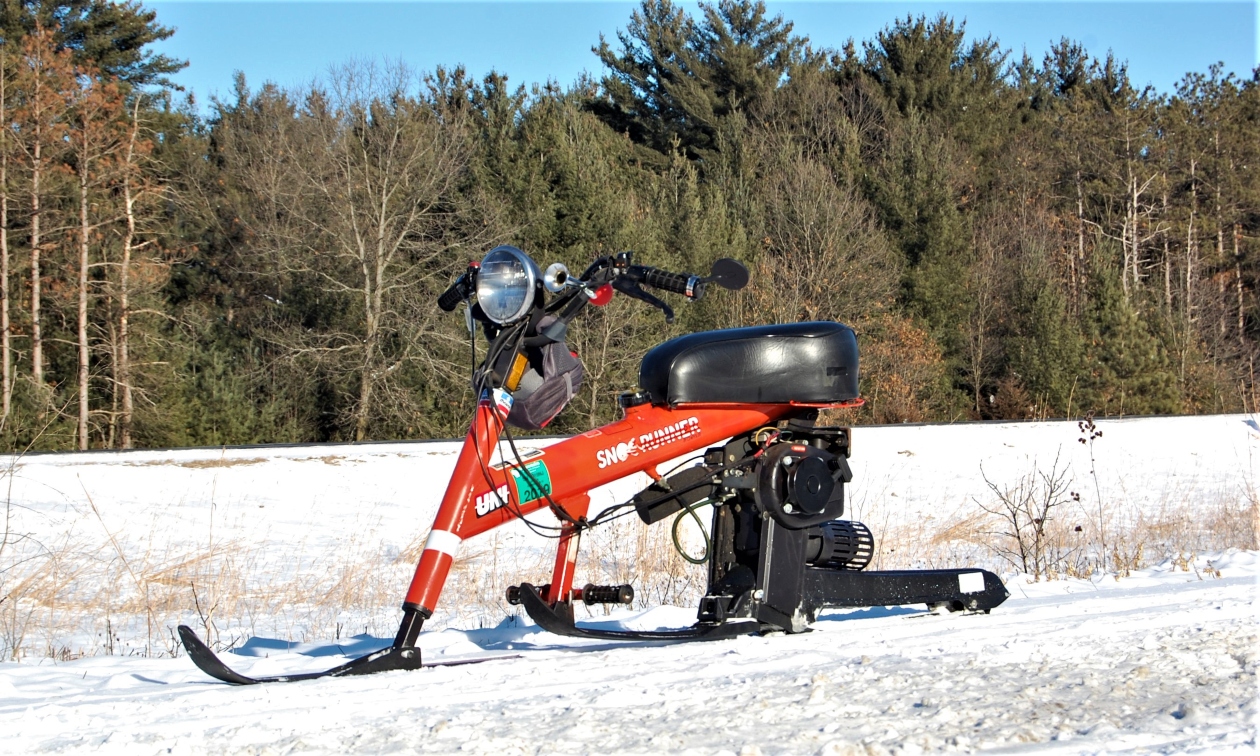
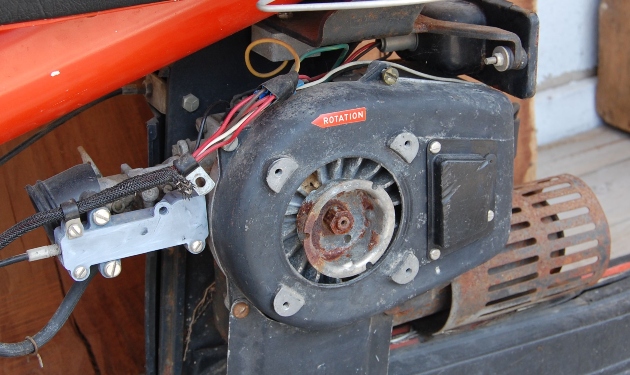
When I first saw my Chrysler Sno-Runner in July, 2016, it was in a sorry state. It sat on the veranda of an antique shop, grimy, forlorn and it was a consignment that nobody knew anything about. The recoil starter was missing. The roller chain final drive which is the track was rusted into a solid chunk. There was no air cleaner. How long the thing sat in somebody’s barn, non-running, carburetor and fuel system gunked with very old gas varnish was a mystery, as was whether any parts were available to restore the thing.
On the bright side, the engine was not seized and compression was good.
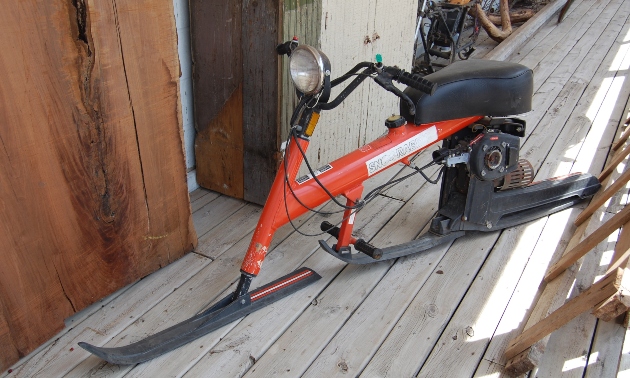
Even though I’ve been into snowmobiles since my first Ski-Doo Olympique in 1969, I had never seen, or even heard of a Sno-Runner! But as a long-time motorcyclist, the chance to have a mysterious vintage snow bike was irresistible!
My better half, Jacci saw me ogling the thing and she said, “If you want that thing, let me get it for you. I never know what to get you for your birthday and that’s coming up!”
So, for $300 it went on the truck and we hauled it home.
In next few days, I found out Chrysler Marine built the thing in the mid-seventies in response to a Department of Defense Request For Proposals (RFP) seeking a contractor to design and build a winter reconnaissance and infantry mobility solution. Requirements in the RFP included 30-mile range on a single tank of fuel, it had to be one-man portable, able to be taken down and reassembled in the field without tools and able to be taken down to fit in a small air-drop container. At least that’s one version of its origins I found at the time.
One thing the specs didn’t address was how much snow depth the vehicle had to be able to handle. Once the prototypes were taken afield, their inability to remain “mobile” in snow more than a foot deep, caused interest in the thing to die.
To recover their development costs, Chrysler Marine took it into the consumer market. It didn’t make dealer cash registers ring and by 1982, with Chrysler already in financial trouble, time ran out on the Sno-Runner. Inventory and rights were sold off to a liquidator, who, in turn, sold it to a businessman in Charlevoix, MI. It is from his business at https://snorunner.com/ that I got most of the parts I needed.
The Restoration
From July until November, 2016, I took the thing apart, figured out what parts I needed and ordered them and did the reconditioning of parts as needed. On my parts order were a recoil starter, which was missing, kill switch and headlight dimmer switch, a new carburetor, and a new final drive track/chain.
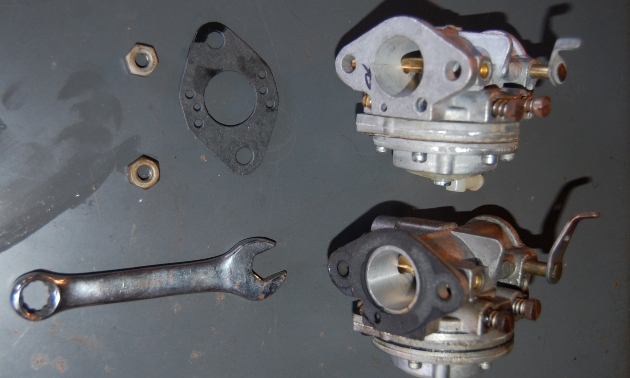
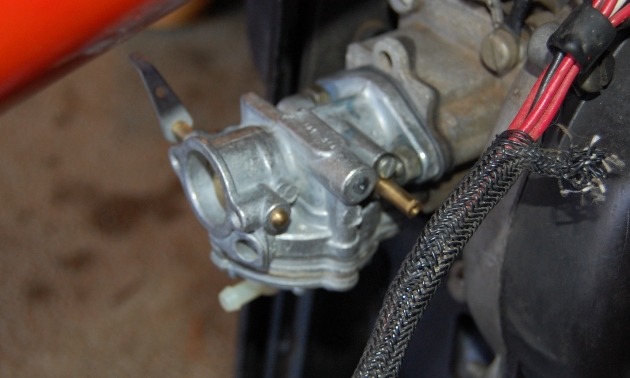
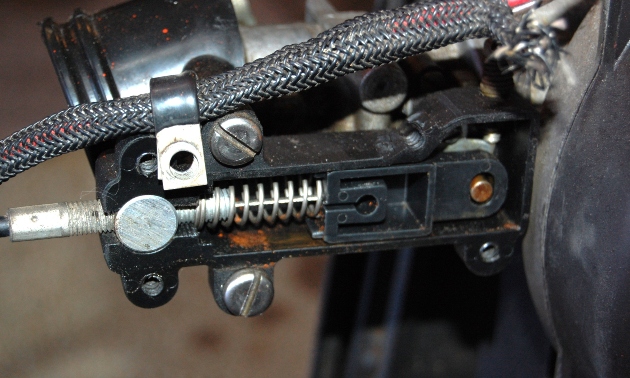
With the new recoil starter installed, I was able to get the engine started with the original carburetor, but it leaked, wouldn’t run above idle and then only with the choke on. Having worked on this type of carburetor on snowmobiles, I decided that trying to refurbish the old Tillotson HL320A carburetor was a waste of time, since new, complete carburetors were available. It was a direct bolt-on item. During the process, I discovered the throttle linkage at the carburetor was a slick, totally enclosed design that has proven impervious to icing. I found that an aftermarket air filter for a vintage Honda CB350 twin was a perfect fit.
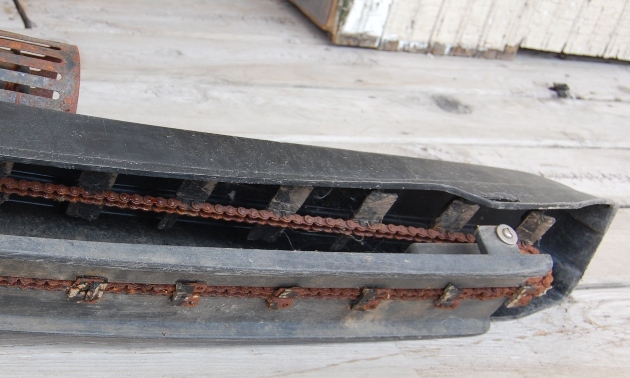
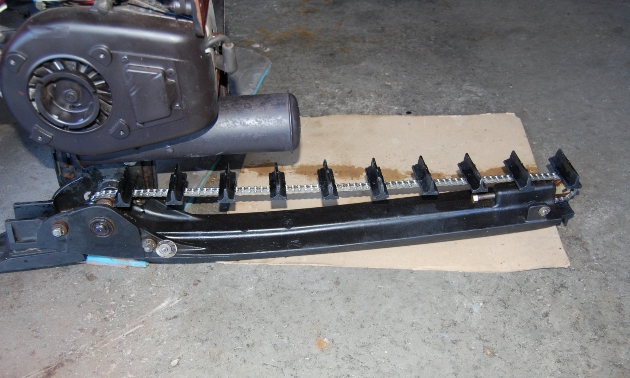
The part I thought could be toughest to get would be the drive chain/track, which was so corroded, it was fused into a solid chunk, making it a hassle to remove. I had to break the old chain and use massive doses of penetrating oil to get it off. Fortunately, an original equipment nickel-plated, cleated track was still available and installation and tension adjustment was easy.
Next, the new headlight dimmer switch and kill switch were installed. The originals each just literally fell apart after a few uses. The Sno-Runner has a hand-operated brake that works with a constricting band that tightens down on the housing of the centrifugal clutch. There are even a high-low beam headlight and taillight with a brake light and everything worked!
The primary drive #35 roller chain from the centrifugal clutch to the track drive sprocket had corrosion and signs wear so that was replaced from local sources.
With most of the mechanical problems addressed, things like damaged paint and surface rust were next. I was able to locally source touch-up paint from a Case tractor dealer—which matched perfectly.
The finish on the all-aluminum frame was generally in good condition once it was cleaned up, but there were spots that had scuffs and scratches, so fortunately, the tractor spray paint was an exact match for the touch-up. A paper label that said “Sno-Rabbit” had been applied over the original Chrysler factory applied “Sno-Runner” transfer. Fortunately, that label came off pretty easily and the original transfer below was not damaged by peeling the label off.
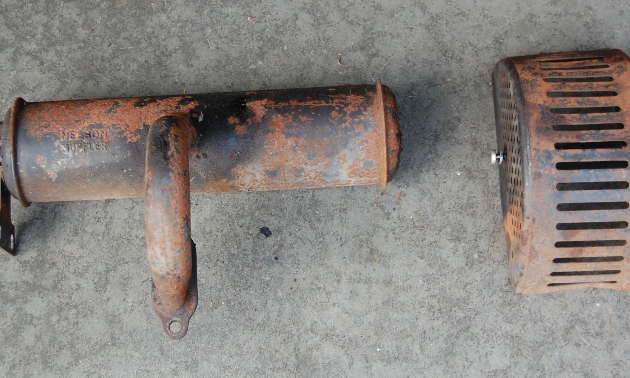
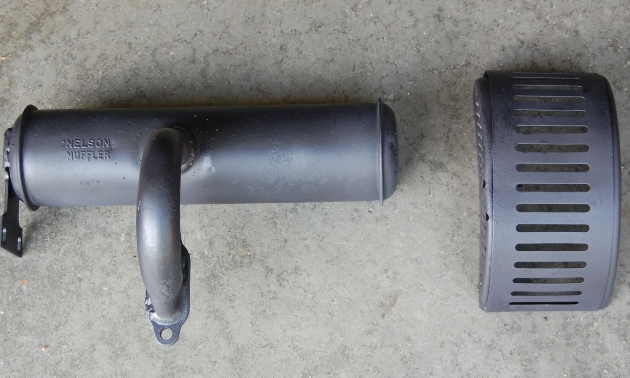
The muffler and heat shield were both covered with surface rust, but there were no holes in the muffler or header pipe. After surface preparation and cleaning, they were refinished with rattle can high-temperature flat black paint. It was the muffler that gave me a key piece of information about my Sno-Runner. It revealed that it was made by Nelson Muffler and was date-stamped 1979. The model year was good to know, but even more interesting was discovering that the muffler was manufactured by a company that was located only about 30 miles from where I live.
The skis are molded plastic reinforced with fiberglass. Their original black surfaces had faded to a dull gray over the years. Four coats of a product called “Restore Black,” brought the original surface color back.
The engine is a loop-charged single-cylinder 134cc two-stroke West Bend Power Bee engine with CD ignition putting out claimed 7 bhp. A 90W generator operates the high/low sealed beam headlight and taillight that includes a brake light. To my amazement, the electrics all worked.
The Ride
The chassis is fabricated of thick-walled aluminum tube with the top frame member of about 4-inch diameter stock, which doubles as the 1.3 gallon fuel tank to hold the 40:1 premix. The engine is a stressed member. The seat is wide and massively padded, which is a good thing because there is no suspension front or rear. It weighs about 85 lb. full of fuel.
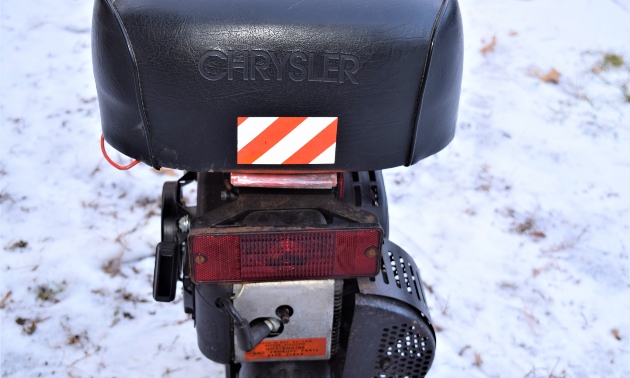
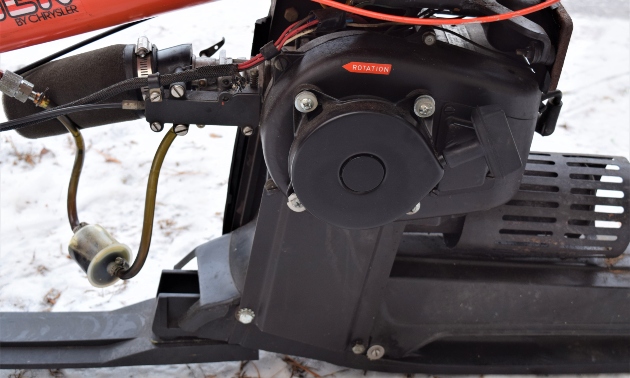
Power gets to the 21-cleat final drive track chain by a single-speed transmission with an automatic twin-shoe centrifugal clutch. A contracting-band brake that squeezes the outside of the clutch housing is activated by a hand lever on the left handlebar. At first glance, that brake mechanism looks pretty innocent, but in use, grabbing a fist full of that brake lever locks the track and stops the Sno-Runner right now!
The throttle is a twist-grip type exactly like a motorcycle, so I felt right at home using it. I didn’t miss the thumb lever style throttle on my ancient Ski-doo Olympique. Riding in deep powder tended to get snow melt on the throttle linkage of the exposed carburetor back then. Forgetting to check the throttle for sticking on re-starting the Ski-doo could occasionally result in tricky situations. That has not happened even once with the Sno-Runner’s enclosed throttle cable linkage.
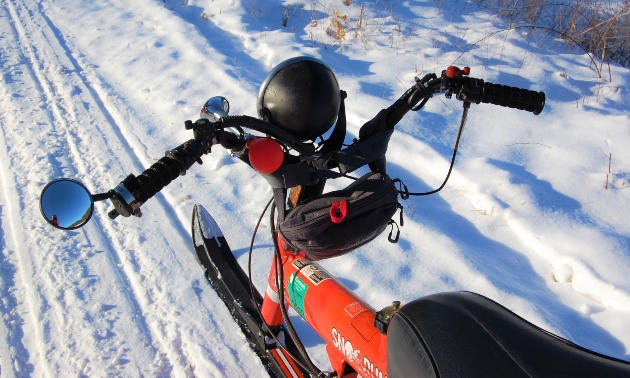
Starting is straightforward—make sure the fuel tank vent is open, set the choke to full, push in the decompressor, give the recoil starter a couple of pulls, turn off the choke when it fires up and runs for a few seconds, pull the decompressor button back out. I tend to lift the track off the snow using the grab handle provided at the bottom of the seat and give it some throttle to keep it running and help it warm up. After warm-up set the track down, mount up, twist and go!
The Sno-Runner handles like a street motorcycle on a smooth, groomed trail and really does well with up to about ten inches of powder over a firm, smooth base. Under those conditions, it is predictable and carves a nice line. Rutted, heavily used trails are more of a challenge, with the feel of the ride more like a dirt bike in sand. The front ski and the middle ski tend to wander from rut to rut, making handling a little squirrely. Since there is a wide, molded-in runner on the front ski, but no metal skag or carbides to help hold the line, on ice or very hard packed snow, it is really a matter of slowing way down, sometimes even putting feet down to prevent a slide-out.
Acceleration is surprisingly good for a machine with a centrifugal (a-la mini-bike) clutch. Claimed top speed is only about 35 mph, but being as close to the ground as the rider’s back pockets are, on a rough trail, it seems faster.
So, ten years after finding the Sno-Runner as a forlorn, mysterious, non-running lump, would I do it all over again? Heck yes! Here’s a video of one of my first rides after the restoration.
Interested seeing some of my motorcycle stories? Check them out at: https://ultimatemotorcycling.com/author/gary-ilminen/ and www.ultimatemotorcycling.com.
About the author:
Gary Ilminen has been a snowmobile enthusiast since 1969 and motorcyclist since 1974. A part-time freelance writer and photographer since the 1970s, he does most of his writing about powersports since his retirement from work as an RN and former EMT/Paramedic and firefighter. He has competed in motorcycle land speed racing at the Bonneville Salt Flats in Utah four times. In 2014, he took a 1974 Honda CB350F that he restored to Bonneville and set an AMA National Land Speed record with it. That record still stands!